



- Efficiency is engineered at the design stage, not measured after the fact, with integrated systems delivering predictable performance from day one.
- Capacity scales with demand, avoiding the stranded capital and premature commitments of traditional large-scale builds.
- Controlled manufacturing reduces waste, shortens build timelines, and closes the energy performance gap common in conventionally built facilities.
Traditionally, Efficiency in data centres has been assessed once systems are operational, measured through energy consumption, cooling performance, and cost management. As infrastructure requirements continue to evolve, particularly with the increasing influence of AI and high-density workloads, this approach no longer captures the full picture. The decisions that determine long-term performance are now made in the design stage, and their results play out across the entire lifetime of a facility.
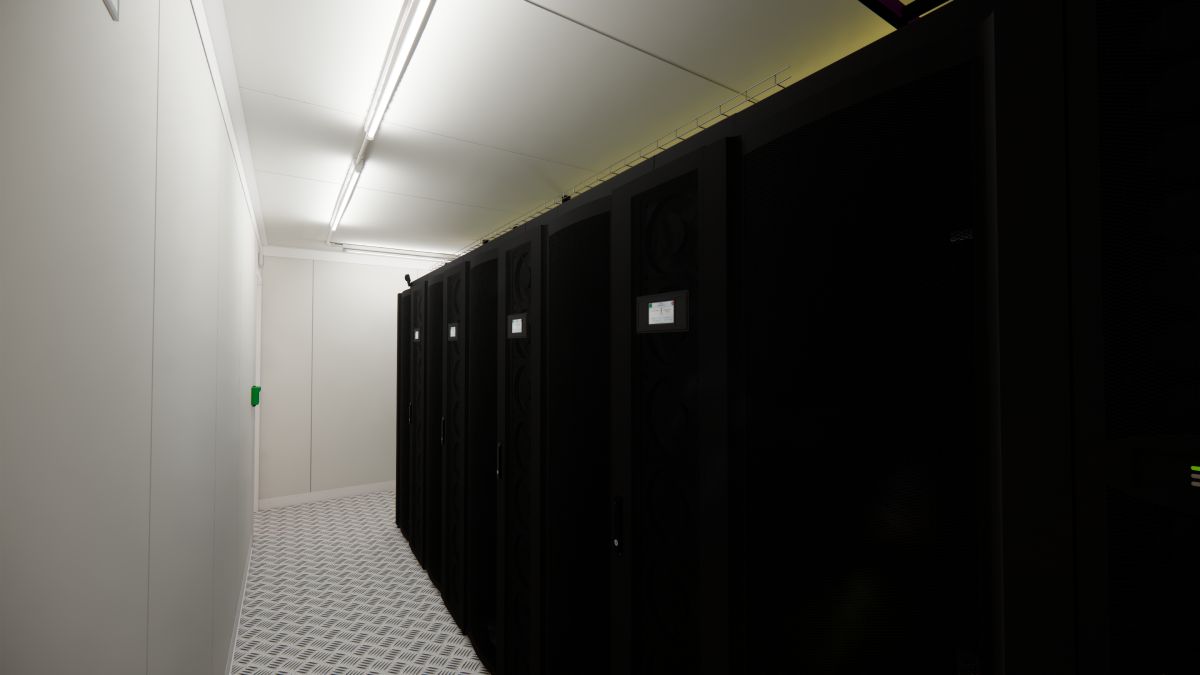
Prefabricated modular data centres make this reality more tangible as core systems are engineered together within a controlled manufacturing environment, so the infrastructure arrives as fully integrated, rather than incrementally assembled on-site. That cohesion reduces the variability and modifications that on-site construction typically introduces, enabling performance that is predictable from commissioning onwards.
This matters more as the demands placed on modern infrastructure have grown considerably, with AI workloads requiring levels of power density and thermal precision that many legacy facilities were never designed to support. Retrofitting those facilities is both technically and financially complex, with engineering investments frequently absorbed by remediation rather than delivering new capability. Prefabricated modular environments avoid this by building those requirements in from the start.
The operational consequences of getting this right extend beyond performance. In environments where uptime and compliance carry real weight, the gap between infrastructure engineered to meet those requirements and infrastructure adapted to meet them is significant.
The same gap appears in how organisations manage capacity over time. Traditional large-scale builds compound this problem by requiring long-term capacity commitments that frequently outpace demand, locking in capital well ahead of the point at which it’s needed.
A modular approach allows organisations to deploy capacity in line with requirements, keeping investment aligned with needs and preserving the flexibility to respond as workloads and external conditions evolve.
The environmental impact of a data centre is influenced as much by how it is built as by how it operates. Controlled production settings use materials more precisely and generate less waste, alongside shorter build timelines reduce the footprint of the construction process itself. As integrated systems are optimised from day one, the energy performance gap that often emerges in conventionally built facilities is largely avoided.
At EfficiencyIT, every solution we develop and deliver is built around these principles, enabling us to offer prefabricated modular infrastructure that addresses the current challenges organisations face rather than the ones they faced just a decade ago.
Find out more about how our solutions can benefit your operations here – https://efficiencyit.com/book-a-call-with-a-specialist/


